
Erie County Sheriff Active Warrant List
The Erie County Sheriff's Office runs an outstanding warrants page that names people it currently seeks. The office says it makes reasonable efforts to monitor and update the list on a regular basis. That is not a promise a warrant is still active at the moment you search. Always confirm with law enforcement or the court before acting on what you find.
The warrants page is shown below. See it at the Sheriff's warrants page.
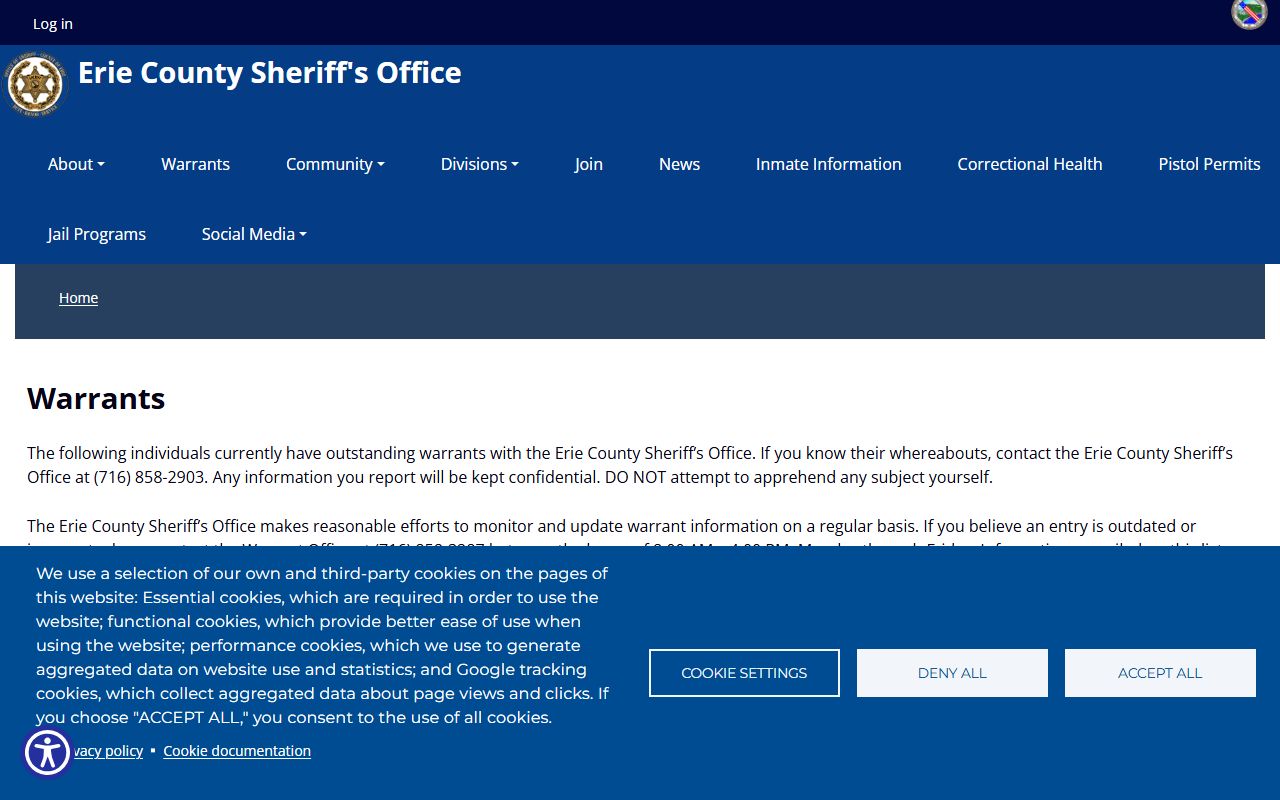
The page lets you filter the list and open an individual profile for each person sought. The list covers Sheriff warrants only, not every court warrant in the county.
One point matters most. The Sheriff's warrant page is an active law-enforcement list, not a court docket. It can show who the Sheriff is looking for, but the issuing court and the case file control the legal status. A warrant may be cleared in court before the online list catches up. The reverse can happen too, where a fresh warrant is not posted yet. So the list is a starting point for an Erie County warrant search, not the final word.
Erie County Warrant Search Fields
The Sheriff's warrant page offers a few filters to narrow the list. You can sort by date, search a last name, or filter by the reason for the warrant. The field set is below.
| Field | Type | Required | Notes |
|---|---|---|---|
| Date | Date | Optional | Results can sort and order by warrant date. |
| Last Name | Text | Optional | Filters the list by surname. |
| Reason for Warrant | Text | Optional | Filters by the charge or stated reason. |
| Items per Page | Dropdown | Optional | Sets how many entries show, such as 25. |
| Sort / Order | Controls | Optional | Order by date, ascending or descending. |
Because the filters are simple, search broadly first. Try a last name on its own before adding a date or reason. Spelling matters, so check name variations if you get no result.
How to Read a Warrant Entry
Each warrant entry opens to a profile with the person's details and the warrant facts. The fields below come from the Sheriff's listing and a sample profile page.
- Name and address.
- Physical description: race, sex, height, weight, hair color, eye color.
- Warrant date and warrant number.
- Reason for the warrant or the charges.
- Multiple warrant numbers or charges on some entries.
A sample warrant profile is shown below. See the list and profiles at the Sheriff's warrants page.
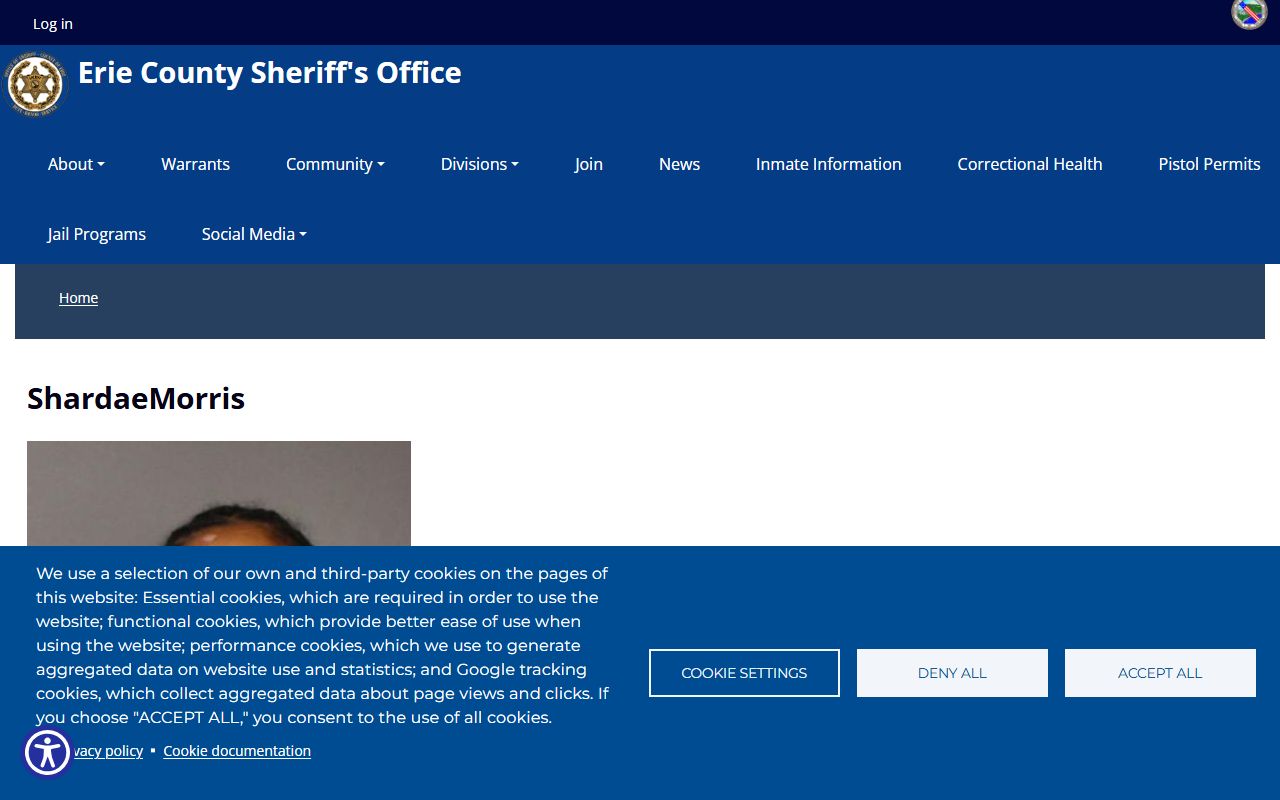
Listed charges in the warrant data have included grand larceny, possession of a forged instrument, criminal possession of stolen property, conspiracy, DWI, strangulation, violation of probation, criminal mischief, reckless endangerment, identity theft, and assault.
Types of Warrants
Not every warrant means the same thing. The type tells you which court issued it and why. Knowing the type helps you figure out where to go to clear it.
- Arrest warrant
- Issued when there is cause to arrest a person for a crime.
- Bench warrant
- Issued by a judge, often after a person misses a court date.
- Violation of probation warrant
- Issued when someone breaks the terms of probation.
- Family or civil warrant
- Tied to a family court or civil enforcement matter.
A warrant on a new criminal complaint differs from a bench warrant for a missed date. The Sheriff list may not state the type clearly, so the issuing court is the place to confirm it.
Bench warrants are common. Many start with a missed court date on a minor case, then snowball. A small traffic matter can turn into a bench warrant, which can then surface during a routine stop. That is why a quick warrant check matters even for people who think they have no open cases.
How to Resolve an Outstanding Warrant
An open warrant does not go away on its own. Ignoring it can lead to arrest at a traffic stop or a job background check. The steps below are the safe way to handle one.
- Do not rely only on the web list. Verify with the issuing court, the Sheriff's Office, or an attorney.
- Find the warrant number and the issuing court or agency if they are shown.
- Figure out the warrant type, since a bench warrant clears differently than a new criminal warrant.
- Talk to a lawyer, or ask about the Assigned Counsel Program if you cannot afford one.
- If surrendering, ask where to report, when court is in session, and whether bail can be posted.
- Bring identification, case paperwork, and a payment method for any bail or fines.
- After the matter is resolved, confirm the warrant is cleared in court and law-enforcement systems.
Note: web warrant lists can lag behind the courts, so a cleared warrant may still show online for a while.
Verification Limits
The Sheriff's list is a snapshot, not a legal certificate. A name can stay listed after a warrant is recalled, or a new warrant may not appear right away. The list also covers only warrants the Sheriff holds. A bench warrant from a city or town court may not show there at all. For full case status, use the court records page or contact the court directly.
Bond and Surrender
If you plan to surrender on a warrant, planning helps. Ask the court whether bail or bond can be posted and how much it may be. Bring funds or a payment method in case bail is set. A surety or bond company can guarantee bail in some cases. Document any medical or medication needs in advance so the jail can address them. For who is held and how custody works, see the inmate records page.
Timing the surrender helps too. Try to report when court is in session so a judge can set bail the same day. Surrendering late in the day or right before a weekend can mean a longer hold. A lawyer can often schedule the appearance to cut that wait.
Getting an Attorney
Anyone facing a warrant should think about legal help before acting. A lawyer can contact the court, arrange a surrender, and argue for reasonable bail. Erie County uses the Assigned Counsel Program for eligible people who cannot afford a lawyer. Ask the arraigning court about eligibility. Legal Aid Bureau of Buffalo and Neighborhood Legal Services also help depending on the case type.
An open warrant can affect more than a court case. It can show up on a background check, block a job, or lead to an arrest at the border or a traffic stop. Clearing it early, with counsel, almost always goes better than waiting. The longer a warrant sits, the more a small matter can grow.