
FOIL in Erie County
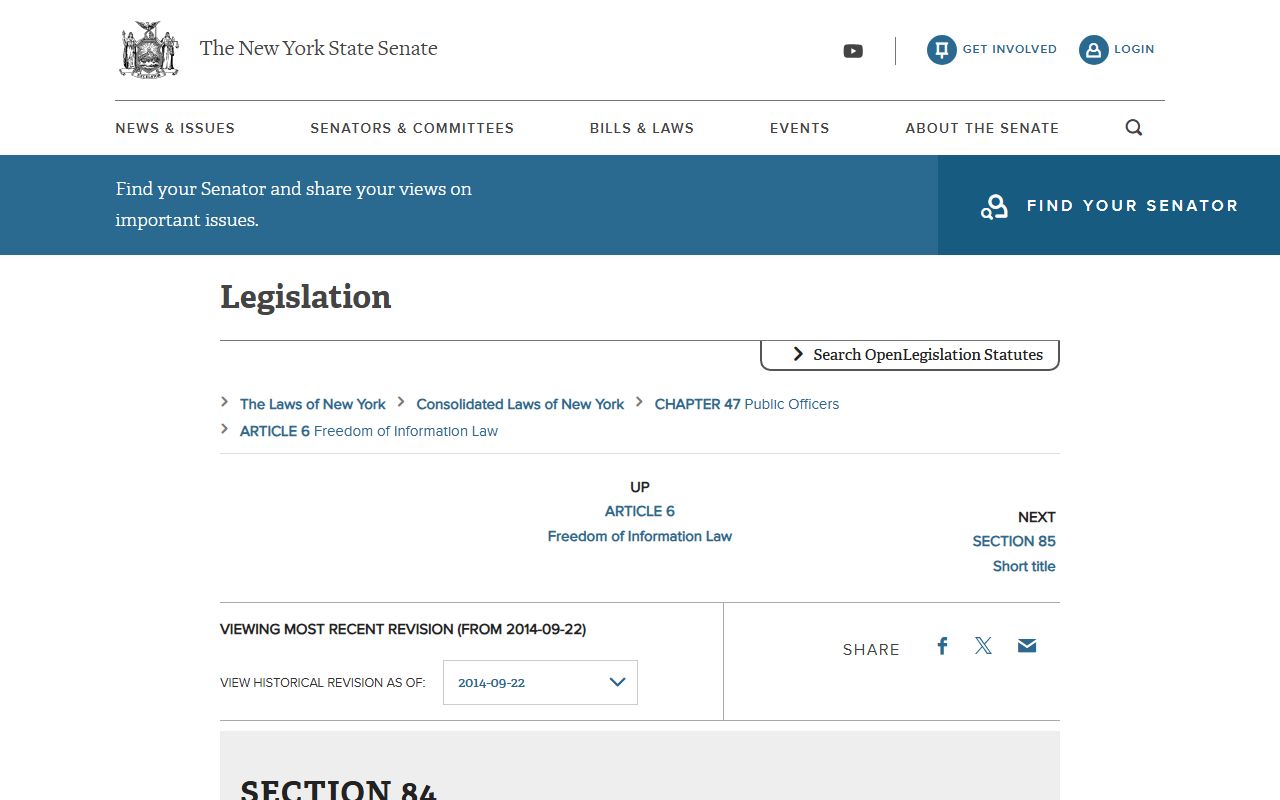
New York's Freedom of Information Law is the main tool for agency records. It lives in Public Officers Law Article 6 and sets a presumption that government records are open, subject to listed exemptions. The law starts from a clear idea. Government is the public's business. The legislative declaration of that idea sits in Public Officers Law § 84.
The POL § 84 declaration page is shown below. See it at the New York Senate site.
FOIL applies to county departments and agencies. It does not work the same way for court records, which follow Judiciary Law and court rules instead.
Clerk Records Without FOIL
Many Erie County records do not need a FOIL request at all. The County Clerk says most of its records are already public through the online search site or the in-office public terminals. So a deed, mortgage, judgment, lien, or filed legal document is usually available through the normal Clerk copy process. FOIL is mainly for records the Clerk does not maintain in an easily accessible format.
That distinction saves time. If you want a recorded document, start with the Erie County Clerk search and copy process, not a FOIL letter. Reserve FOIL for agency records like reports, policies, and correspondence.
How to File a Public Records Request
A FOIL request does not need a special form, but it must be clear. The steps below follow the procedure set in Public Officers Law § 89.
- Find the right office. County departments, the Sheriff, and the DA each handle their own records.
- Put the request in writing and describe the records as specifically as you can.
- Send it to that office's records access officer or FOIL officer.
- Wait for the agency's response within the statutory timing; it must acknowledge the request.
- If records are released, pay any copy fee. If denied, note the reason for a possible appeal.
A clear, narrow request gets a faster answer. A vague request can draw a demand to clarify, which adds delay.
What to Include in a Request
A strong FOIL request gives the agency enough detail to find the records without guesswork. Include the items below.
- Your name and a way to reach you for follow-up.
- A clear description of the records, with dates or a date range.
- Names, case numbers, or addresses tied to the records, if known.
- The format you want, such as paper or electronic copies.
- A note on any fee limit you want to be told about first.
Erie County offers a web FOIL request form for county departments, though independent offices like the Clerk, Sheriff, and DA must be contacted directly. The web form is shown below. See it at the county FOIL form.
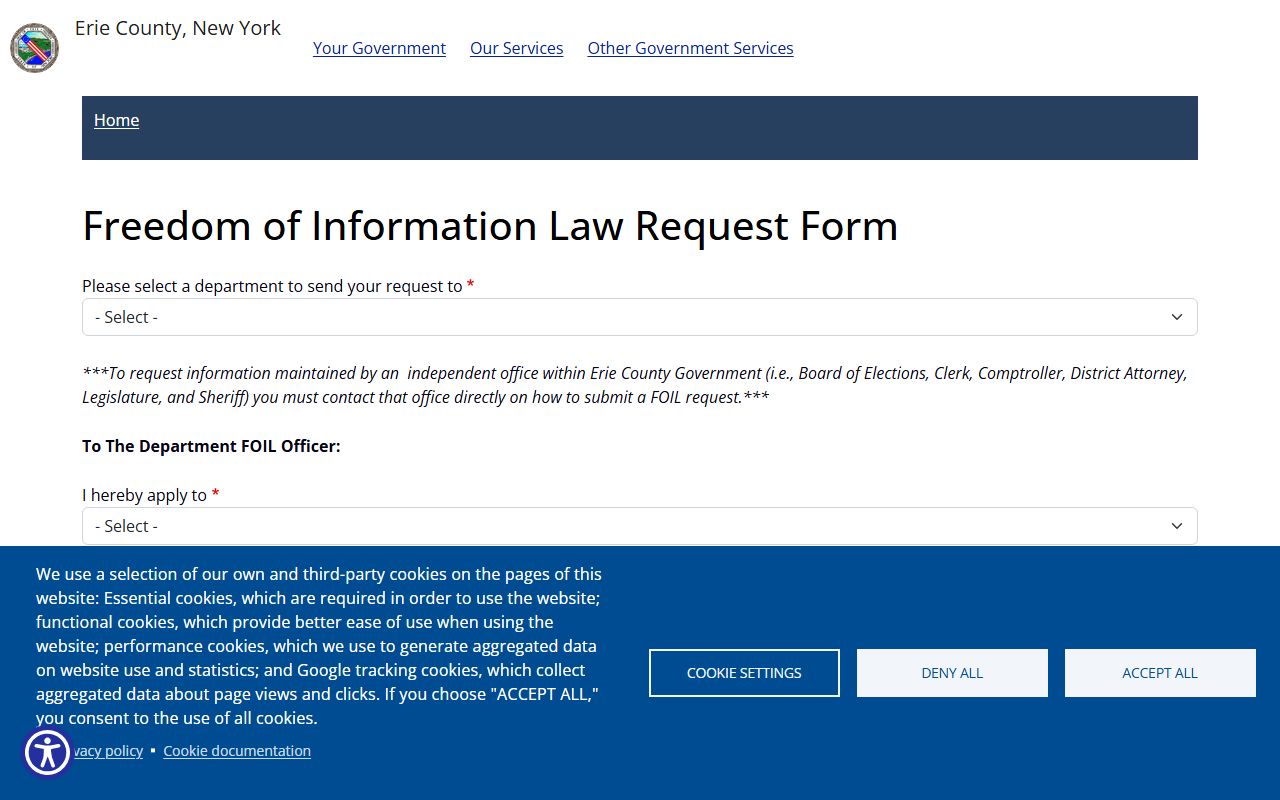
Using the right channel for each office prevents a request from bouncing between departments.
Copy and Search Fees
Fees depend on the record source. FOIL sets a general copy rate, while the County Clerk uses separate CPLR fees for recorded documents. The table shows the common amounts.
| Item | Fee |
|---|---|
| FOIL standard photocopy, per page | $0.25 |
| Clerk plain copies, first 2 pages | $1.30 |
| Clerk certified copies, first 4 pages | $5.00 |
| Clerk digital search, per 2 years | $5.00 per name |
| Clerk manual search, per 2 years | $10.00 per name |
So a FOIL photocopy from a county department costs less per page than a Clerk copy, but the Clerk path is the only one for recorded legal documents. Match the fee to the record type.
Court Records vs Agency Records
The biggest FOIL mistake is treating a court file like an agency record. They follow different laws. This comparison keeps them straight.
| Point | Agency Records | Court Records |
|---|---|---|
| Governed by | FOIL, POL Article 6 | Judiciary Law and court rules |
| Where to ask | Department records access officer | Court clerk, NYSCEF, County Clerk |
| Typical fee basis | FOIL per-page rate | CPLR clerk and court fees |
| Example | Sheriff incident report | Filed motion or judgment |
For court files, use the portals on the court records page rather than a FOIL request.
Confidential Categories
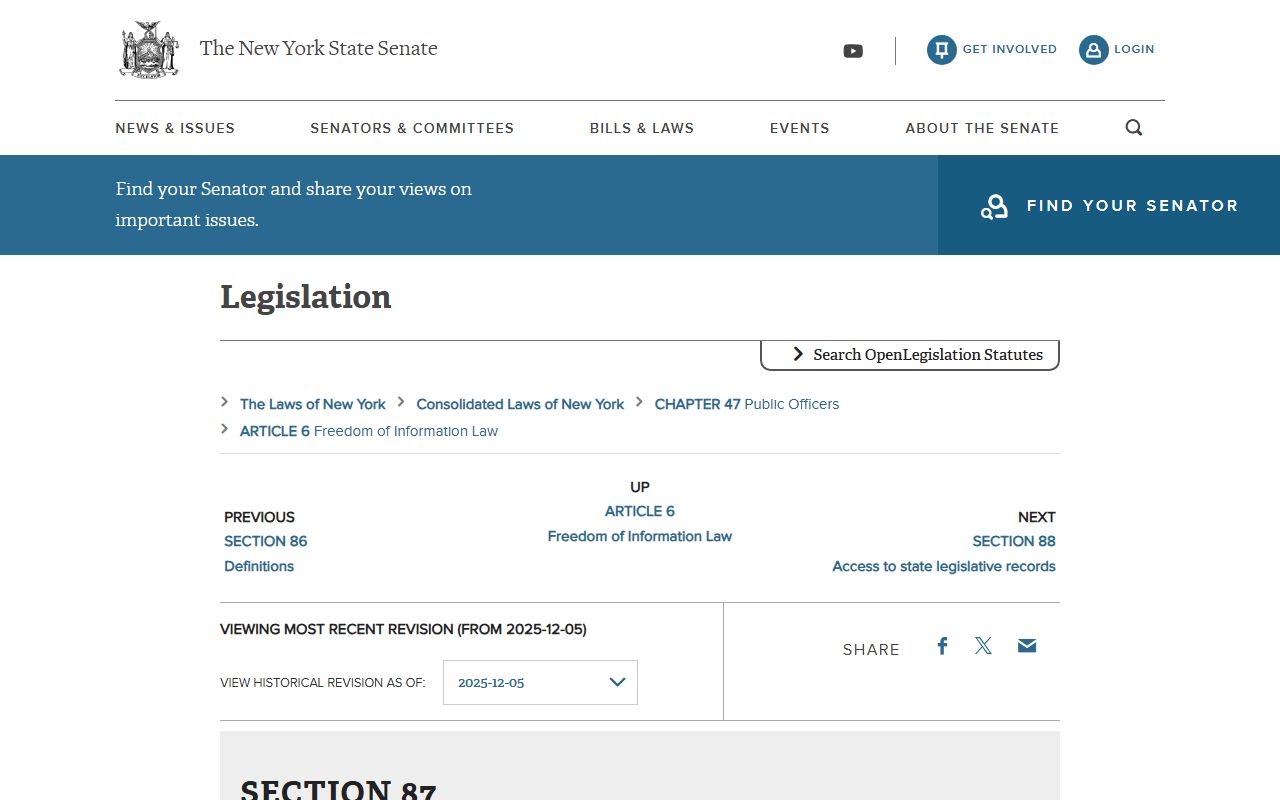
FOIL does not open everything. Public Officers Law § 87 lists exemptions, including unwarranted privacy invasion, law-enforcement interference, trade secrets, and safety risks. A FOIL request also cannot override a sealing statute. Sealed criminal cases, Family Court files, adoption records, and youthful offender records stay closed even to a FOIL letter.
The POL § 87 exemptions page is shown below. See it at the New York Senate site.
A "no record found" reply is not proof an event never happened. It may mean the wrong office, the wrong date range, a sealed record, or a non-indexed field.
Sheriff and DA FOIL
The Sheriff and the District Attorney handle their own FOIL requests. A Sheriff incident report, jail policy, or video goes through the Sheriff's request process, and law-enforcement and privacy exemptions often apply. The DA has its own FOIL officer for administrative records. A prosecutor's case file is a different matter, since grand-jury secrecy, witness privacy, and work-product limits can block access. For arrest and case data, see the arrest records page.
Property, Judgment, and Lien Records
The County Clerk records a deep set of property and financial records. These include deeds, mortgages, civil judgments, satisfactions, federal tax liens, state tax warrants, and mechanic's liens. Most are searchable through the Clerk's public systems. Certified copies follow the Clerk's fee schedule. Because these are already public, a FOIL request is usually unnecessary for a specific recorded document.
One search limit is worth knowing. The Clerk does not index records by street address. If you need a deed by address, the office points you to the Real Property Parcel Search to find the book and page first, then search the Clerk system with that reference.
Appeals of Denials
A FOIL denial is not the end. You can appeal within the agency, and the agency must rule on the appeal. If the appeal is denied, you can challenge the decision through an Article 78 proceeding in New York Supreme Court. The Committee on Open Government issues advisory opinions, but it cannot order Erie County to release a record. Knowing this ladder helps you push a stalled request forward.